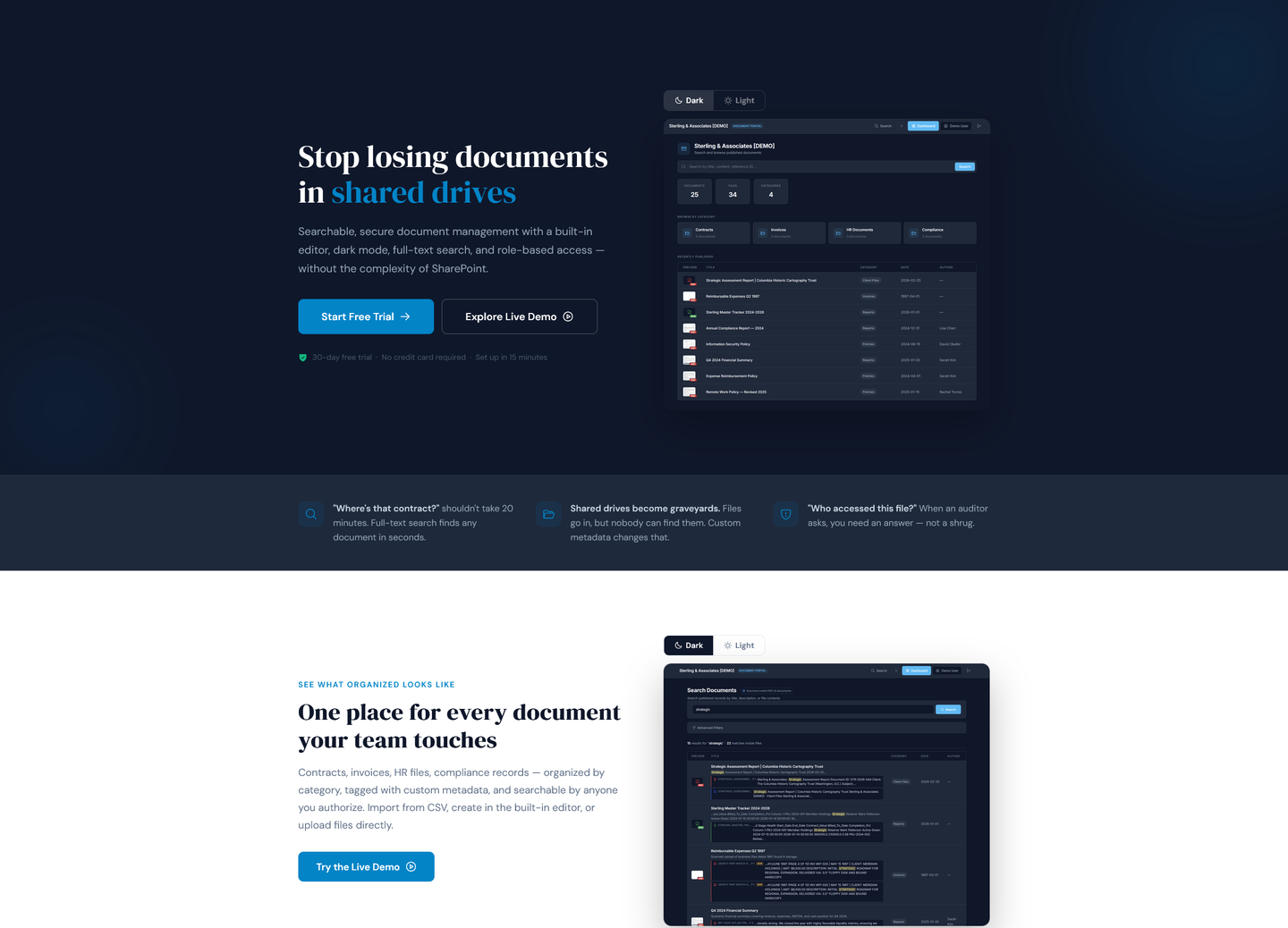
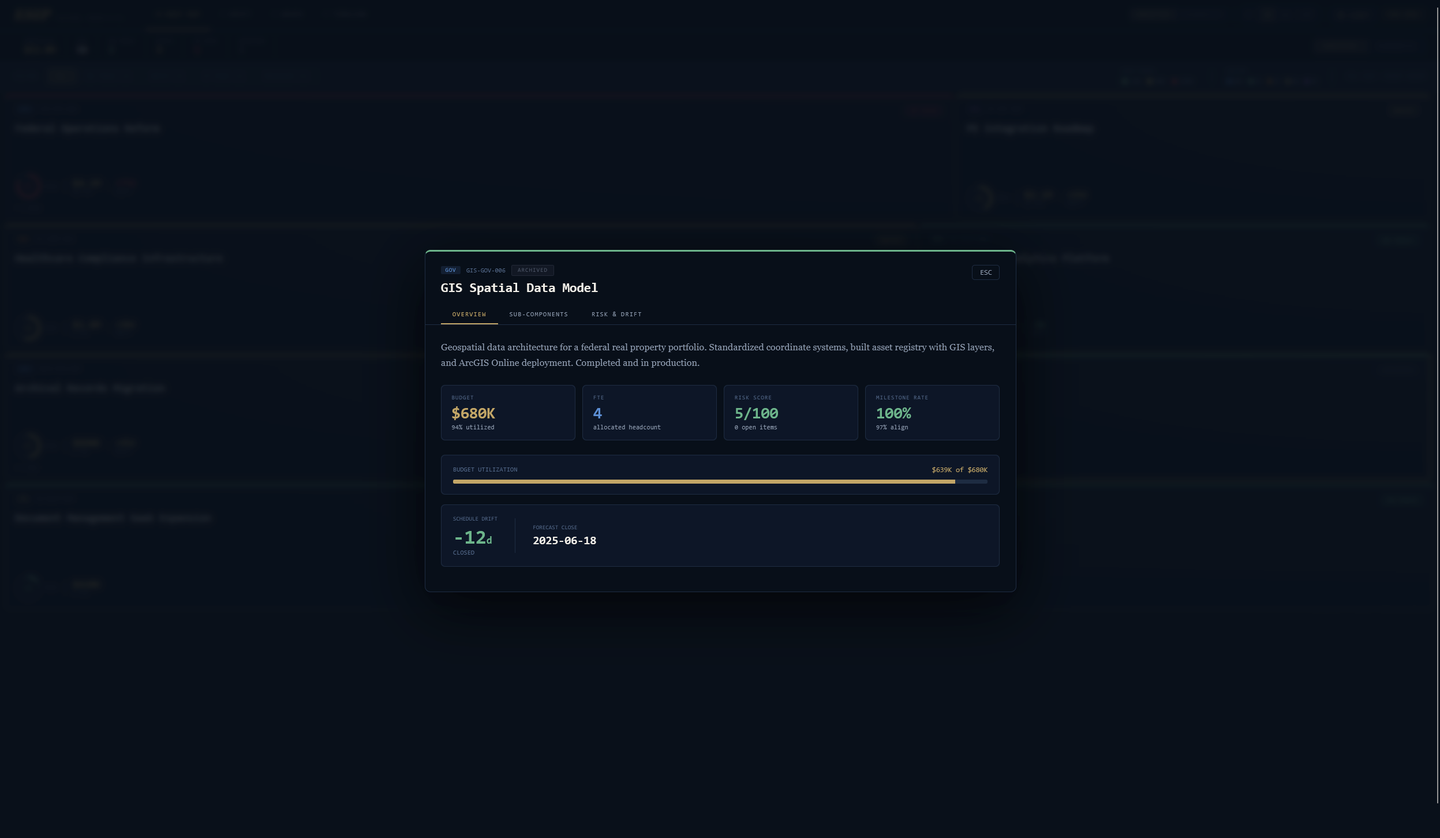
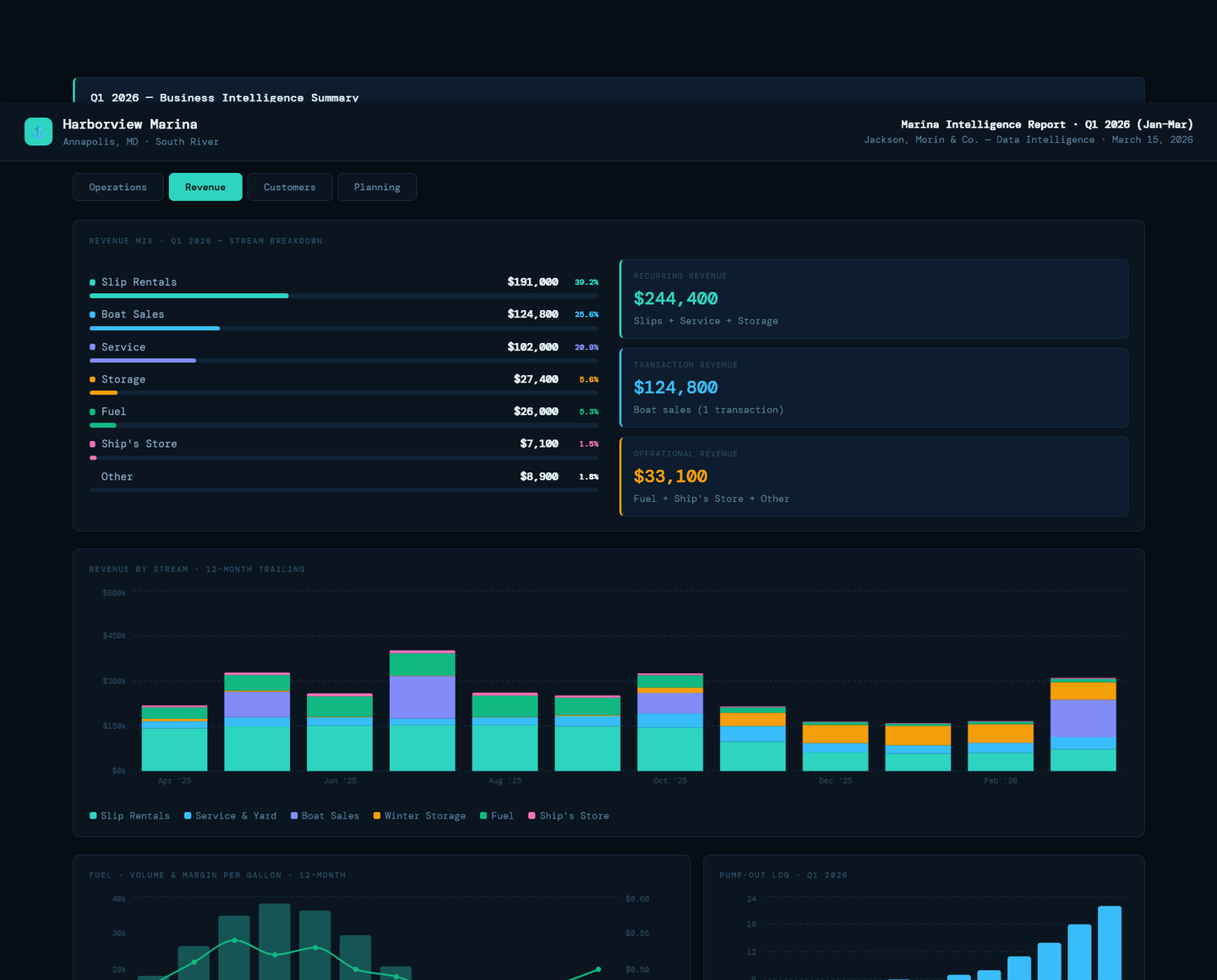
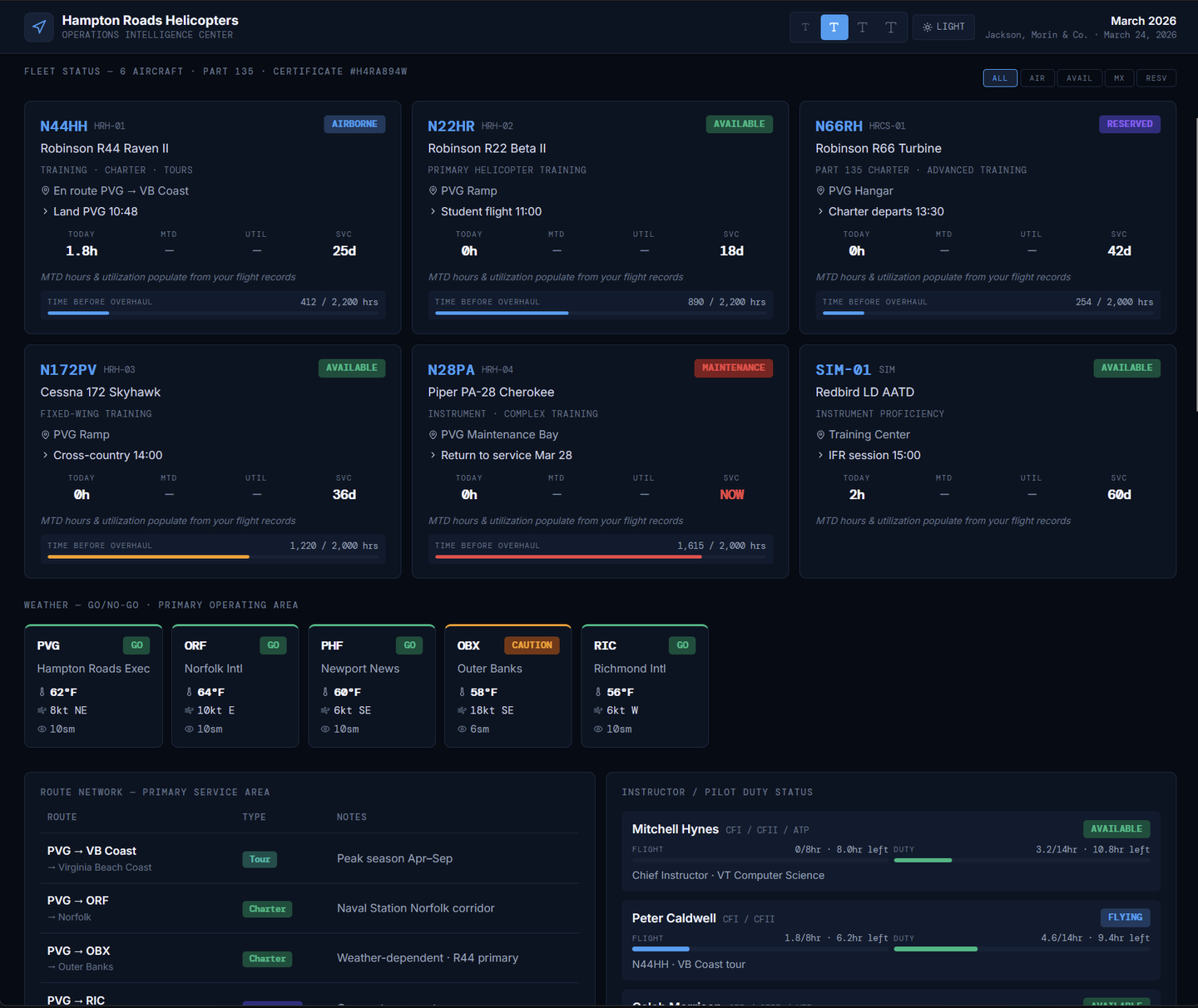
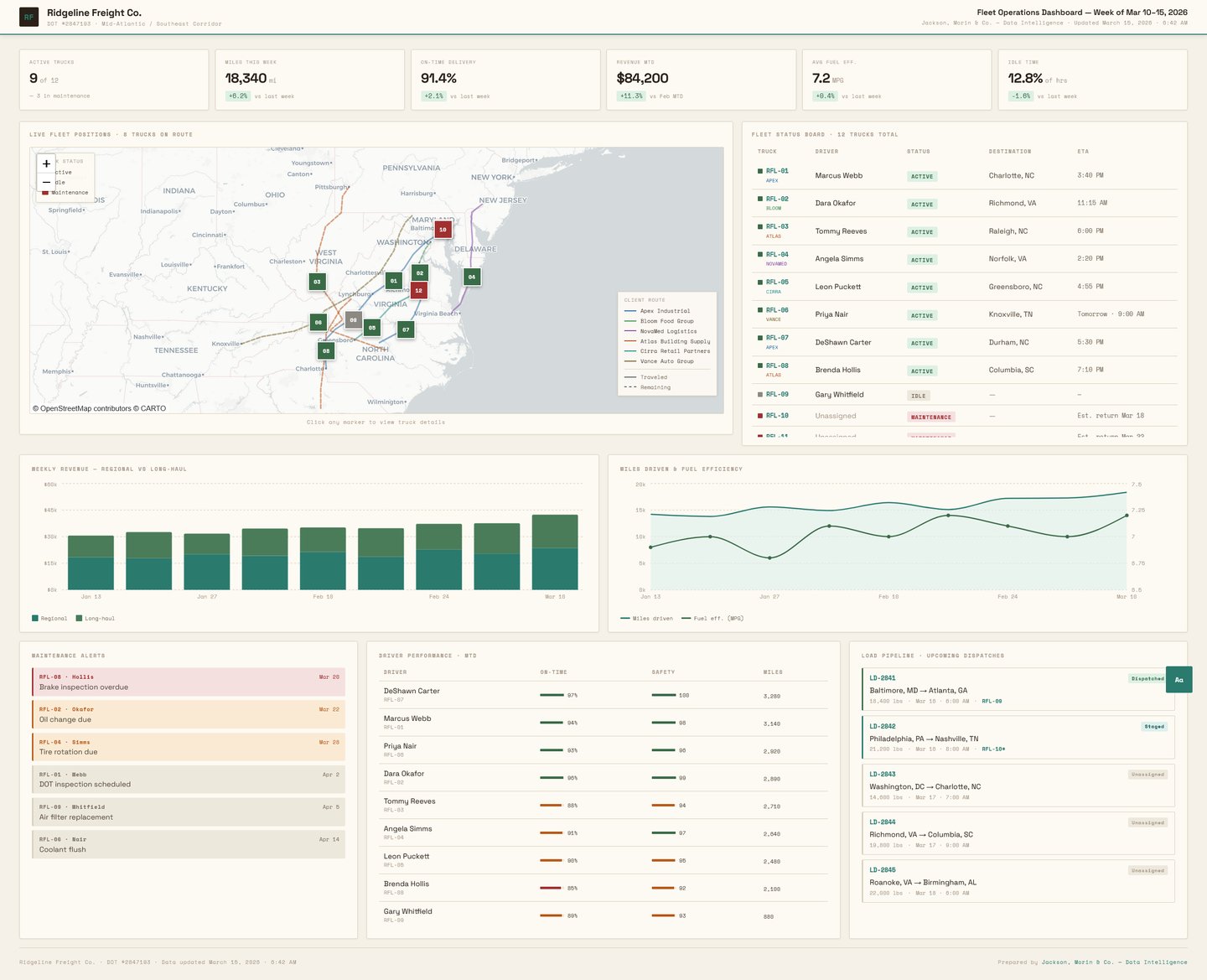
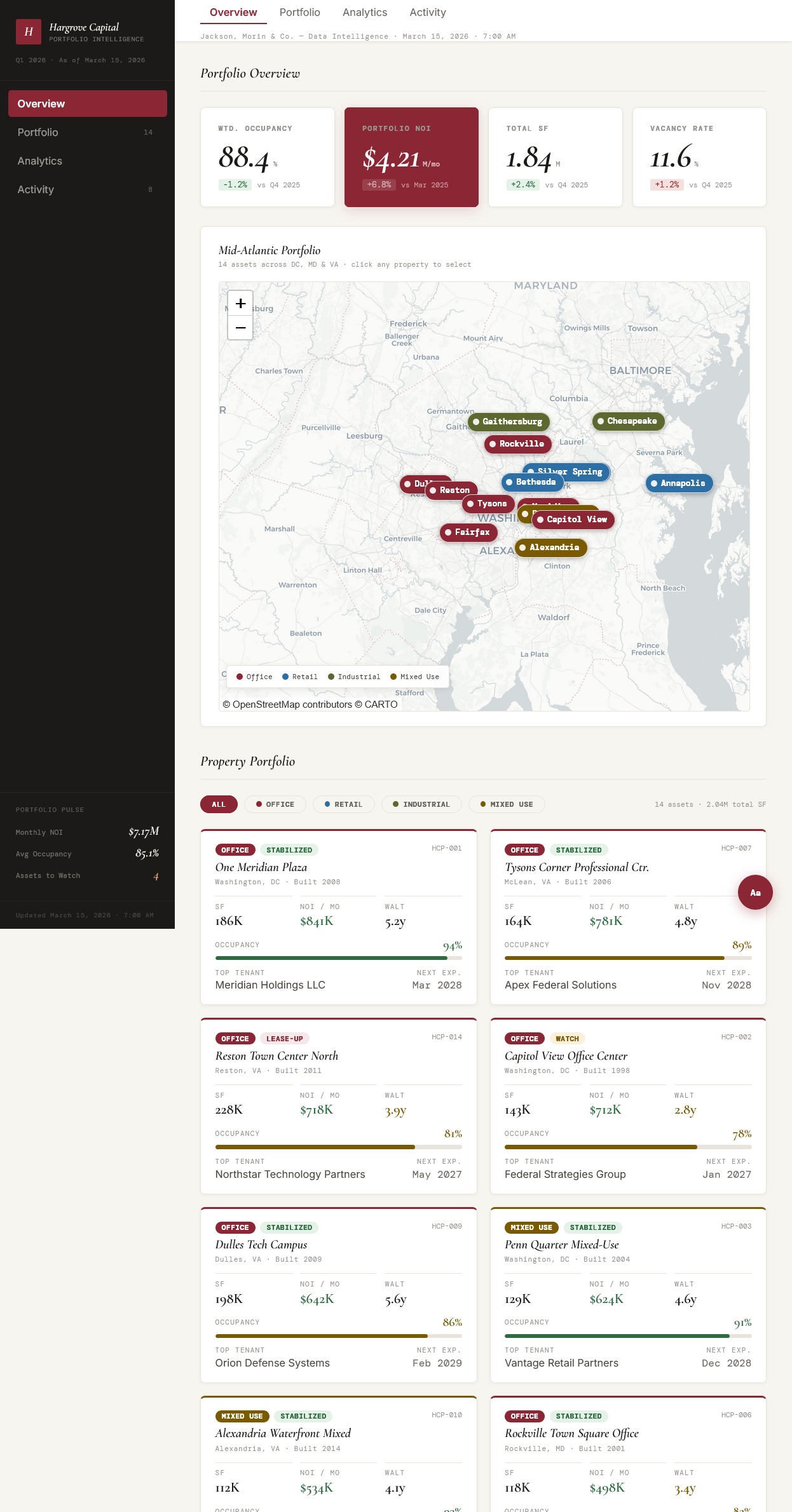
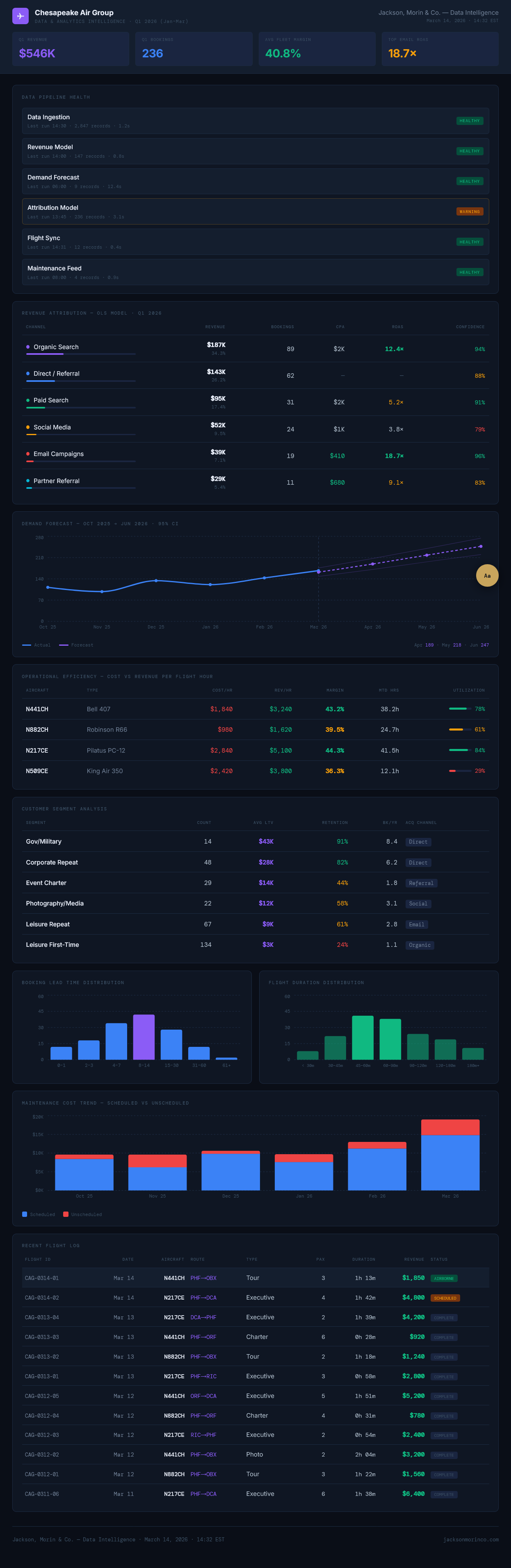
Three situations we solve.
One operating standard.
Each engagement is different in its specifics. The underlying discipline is the same: honest diagnosis, structured execution, and written accountability at every stage.
Initiative Recovery
A program is behind schedule, over budget, or has lost stakeholder confidence. The team is stuck. Leadership needs an outside perspective with the authority to act.
Systems & Operations Design
An operator is scaling — or inheriting — a business whose internal systems have not kept pace. Reporting is unreliable, processes are manual, decisions are made on instinct rather than data. This is where strategy connects directly to our technical practice: the same team that diagnoses the problem redesigns the database, builds the dashboard, and migrates the legacy system.
Strategic Execution Support
Leadership has a clear direction but lacks the bandwidth or internal capacity to drive execution. The plan exists. The implementation needs an experienced hand alongside it.
Scoped. Documented.
Accountable.
Every engagement begins with a defined scope and ends with a formal deliverable. There is no open-ended retainer where the work expands indefinitely. There is also an option to continue on a standing advisory basis once the initial engagement closes.
Discovery & Diagnosis
We interview stakeholders, review existing documentation, and map the current state of the program or system. The goal is an honest picture — not a flattering one. No recommendations are made until the diagnosis is complete.
Diagnostic memo deliveredRecovery Plan
A written plan with a clear sequence of actions, owners, dependencies, and decision gates. Every recommendation is traceable to a finding in the diagnostic memo. This document is the engagement contract for everything that follows.
Recovery plan deliveredExecution
We work alongside your team to execute the plan. Weekly written status reports. Escalation protocols defined in advance. Scope changes require a written amendment — not a hallway conversation. The plan is the plan until it formally changes.
Weekly status reportsCloseout & Handoff
The engagement closes with a formal written closeout: what was accomplished, what remains, standing risks, and recommended next steps. If a standing advisory relationship makes sense, we discuss it here — not before.
Closeout report deliveredOngoing advisory relationship
Once the initial engagement closes, some clients retain JM & Co. on a standing basis — monthly check-ins, quarterly reviews, and a standing seat at the table for decisions that cross the domains we worked through together.
Specific clients.
Not everyone.
JM & Co. takes 2–3 engagements at a time. That constraint is real, and it means every engagement gets principal-level attention. The clients who get the most value are operators in specific situations — not organizations looking for general management consulting.
“A large firm sends a team. You work with whoever shows up. At JM & Co., the principal is the engagement — from diagnosis to closeout.”Vincent Morin II · Principal
Principal-level engagement.
The person you speak with in the first conversation is the person executing the work. There is no bait-and-switch, no handoff to a junior team after the proposal is signed.
Written accountability at every stage.
Every engagement produces formal written deliverables — diagnostic memo, recovery plan, weekly status reports, closeout document. If it is not written, it did not happen. Technical deliverables follow the same standard: architecture documents, data models, API contracts.
Capacity is real.
2–3 engagements at a time, intentionally. Not because of a staffing constraint — because it's the right number to do serious work without spreading attention. If we're at capacity, we'll say so.
Built for operators, not boards.
The deliverables are designed to be acted on — not presented. Recommendations are specific, sequenced, and assigned. A 200-page deck with 47 workstreams is not a recovery plan.
Tell us what's stalled.
The first conversation is scoped, not exploratory. Come with a situation — a stalled program, a broken system, or a business that's outgrown its tools. We'll tell you honestly whether it's the kind of work we do, whether we have capacity, and what the first deliverable would look like.