Systems that run.
Infrastructure that thinks.
Database architecture, backend engineering, API development, and AI integrated as a functional layer in your systems — not as a chatbot you open in a separate tab.
Every system is built to run after launch without hand-holding. Full documentation, automated testing, and monthly reporting come standard.
What we actually build.
Database architecture
Relational schema design from scratch. Multi-tenant structures that support multiple clients on a single database without data leakage. Performance optimization, indexing, migration strategy, and query efficiency — built to handle real production load, not just demos.
Backend & API development
Server-side logic in Django and Next.js API routes. Authentication and role-based access control. Custom REST endpoints built to your business logic, not around what a SaaS product happens to expose. WebSocket support for real-time operational data.
Third-party integrations
Every integration we've built has served a specific operational purpose — not just a demo of what's possible. Live vessel tracking via AIS APIs with Mapbox route visualization. Stripe billing and subscription management. OCR document processing pipelines. Claude AI inference embedded in production dashboards.
Infrastructure & deployment
Cloud hosting across AWS, GCP, Fly.io, and Vercel — matched to the load and cost profile of your actual usage. CI/CD pipelines with automated testing. The Archive Platform ships with 393+ automated tests across the records and accounts modules. Systems that break loudly in staging, not quietly in production.
AI as infrastructure,
not decoration.
We use the Claude API — Anthropic's production-grade AI — embedded directly in the systems we build. Not as a feature to check a box, but as a functional layer that processes your data, interprets your operations, and surfaces intelligence your team can act on.
Natural language interfaces
Instead of teaching your team to write SQL queries, we build a Claude-powered interface that lets them ask questions in plain English and get answers from your actual database. "What were our top three revenue sources last quarter?" — answered instantly from live data.
Automated intelligence reports
Your operational data feeds an AI layer that generates structured reports on a schedule — not a summary you have to prompt for, but a system that runs every Monday morning and delivers actionable findings before you sit down at your desk.
Document intelligence
The Archive Platform combines OCR extraction with AI-powered classification, tagging, and search. Thousands of documents become a queryable knowledge base. AI surfaces what's relevant, flags what's expiring, and indexes what was previously buried in a shared drive.
Operational anomaly detection
AI monitoring layers that watch your operational data in real time and surface deviations that would take a human hours to notice. Revenue dips, inventory anomalies, customer churn signals — flagged automatically before they become problems.
Demand forecasting
OLS regression and ML forecasting models built on your actual historical data. Not a generic BI tool running off-the-shelf models — purpose-built forecasting that understands your seasonality, your market, and your operational constraints.
Try it now.
Ask in plain English.
Meridian Advisory Group is a sample client with a full year of revenue data, client breakdown, and service mix loaded. Ask anything — trend analysis, goal forecasting, client insights. This is exactly what we build for your business.
Using AI.
Building
with AI.
"The deliverable isn't a prompt.
It's a system."
Every business owner has spent the last two years hearing that AI will transform their operations. Most of what they've been shown amounts to a faster way to write emails, a chatbot that answers basic questions, or a document that was produced in thirty minutes instead of three hours.
There are two kinds of AI work being delivered right now. The first is content — AI as a faster production tool. The second is systems — AI embedded as a functional layer in your operations, processing your real data and delivering structured intelligence automatically. The first replaces an hour of work. The second replaces a department.
What we build sits in the second category. When AI is embedded in your systems as infrastructure — not opened in a separate tab, not prompted by hand — it changes what's possible. Reports generate themselves. Anomalies surface before you ask. Your data becomes something you can interrogate in plain English rather than export to a spreadsheet and stare at.
A prompt-generated summary. A chatbot that can answer FAQs. A report that was written faster. Useful — but not infrastructure.
AI that runs on a schedule, processes your live data, and delivers structured output before you ask for it. Natural language interfaces to your database. Anomaly detection that flags problems before you notice them. Intelligence that compounds as your data grows.
Running in production.
Click any link right now.
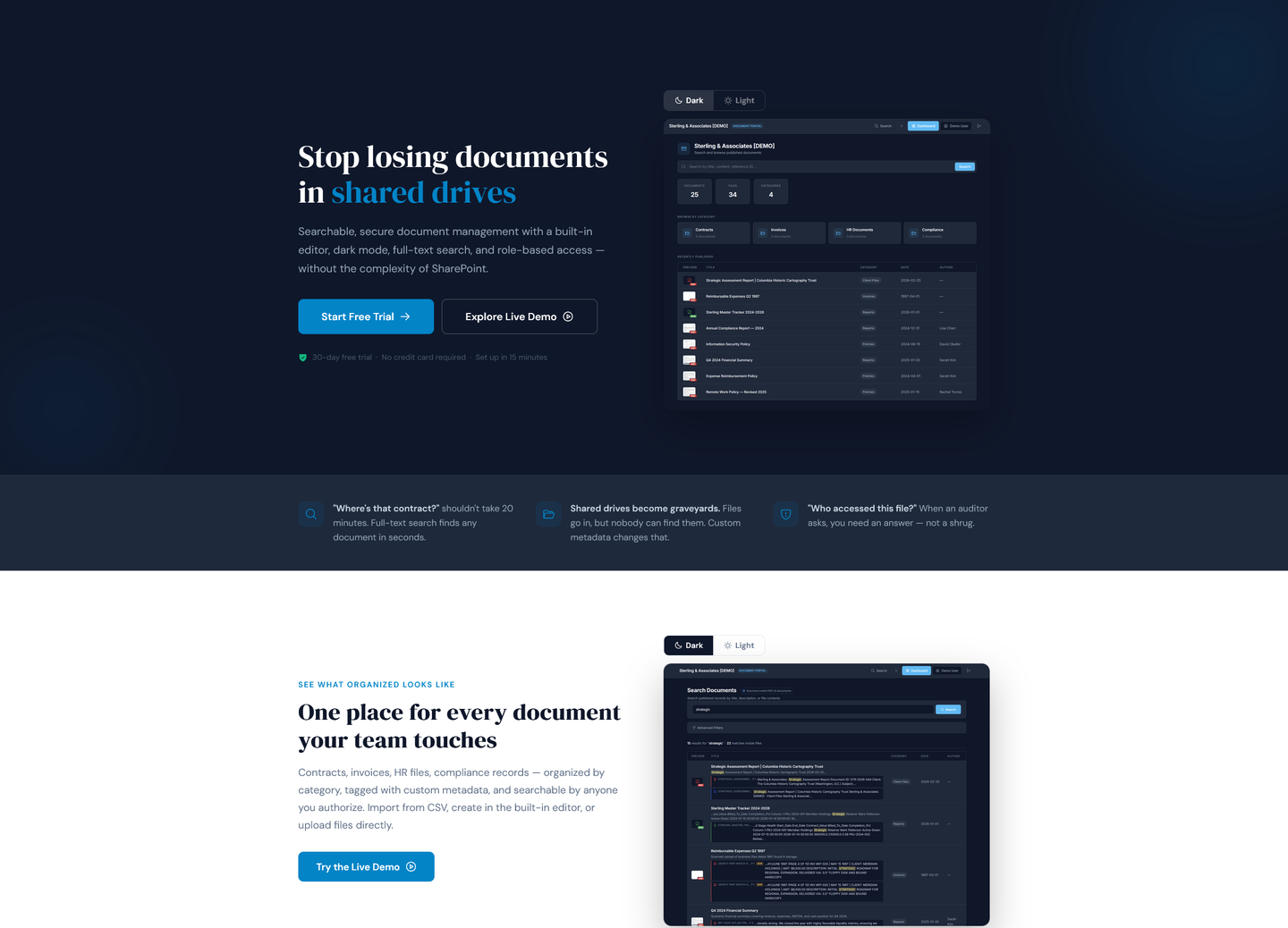
Archive Platform ↗
Document management SaaS with full-text OCR search, dynamic field builder, role-based access, version history, and retention compliance. 393+ automated tests. Stripe billing. AI-powered document classification and retrieval.
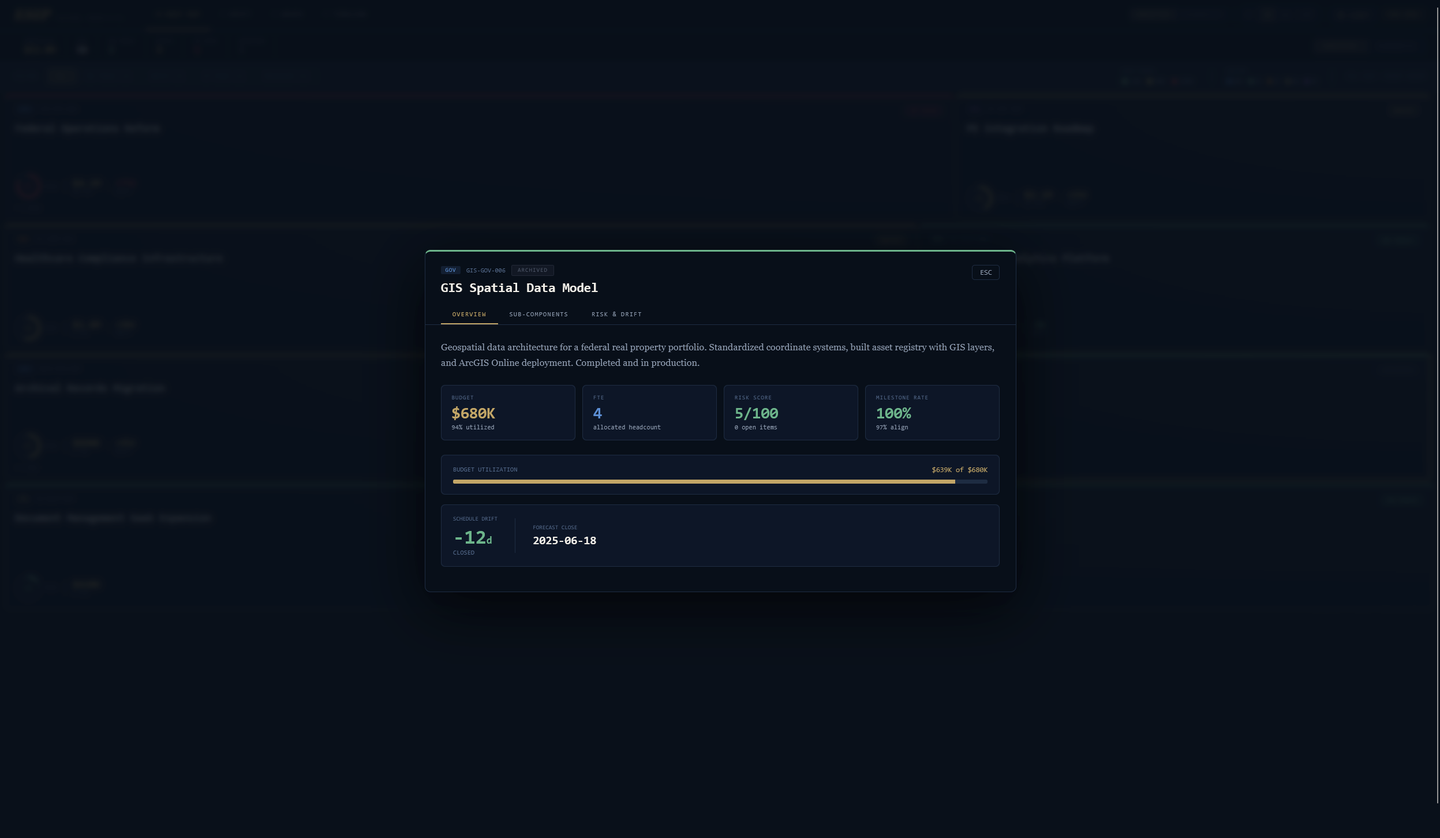
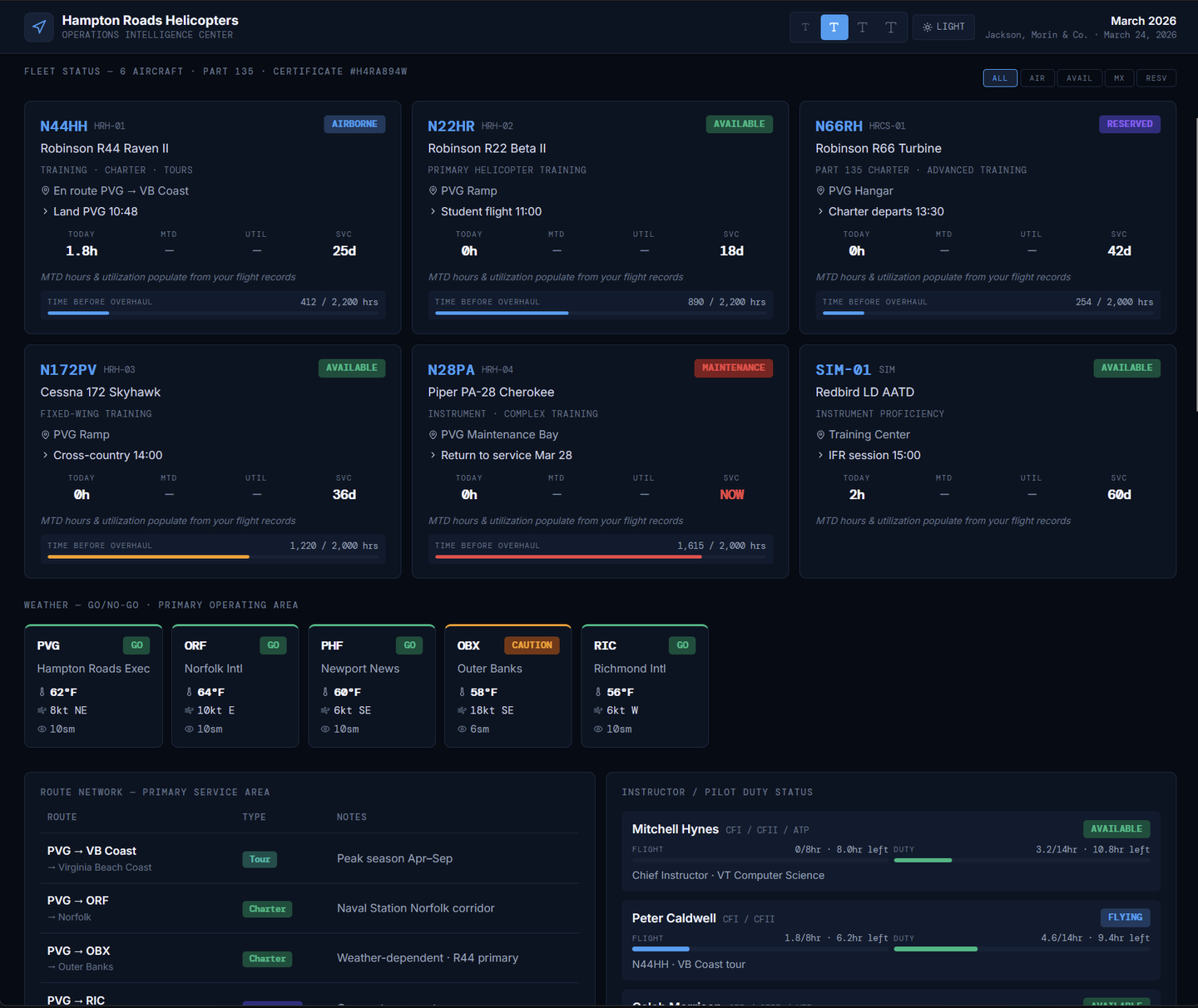
HRH Operations Suite ↗
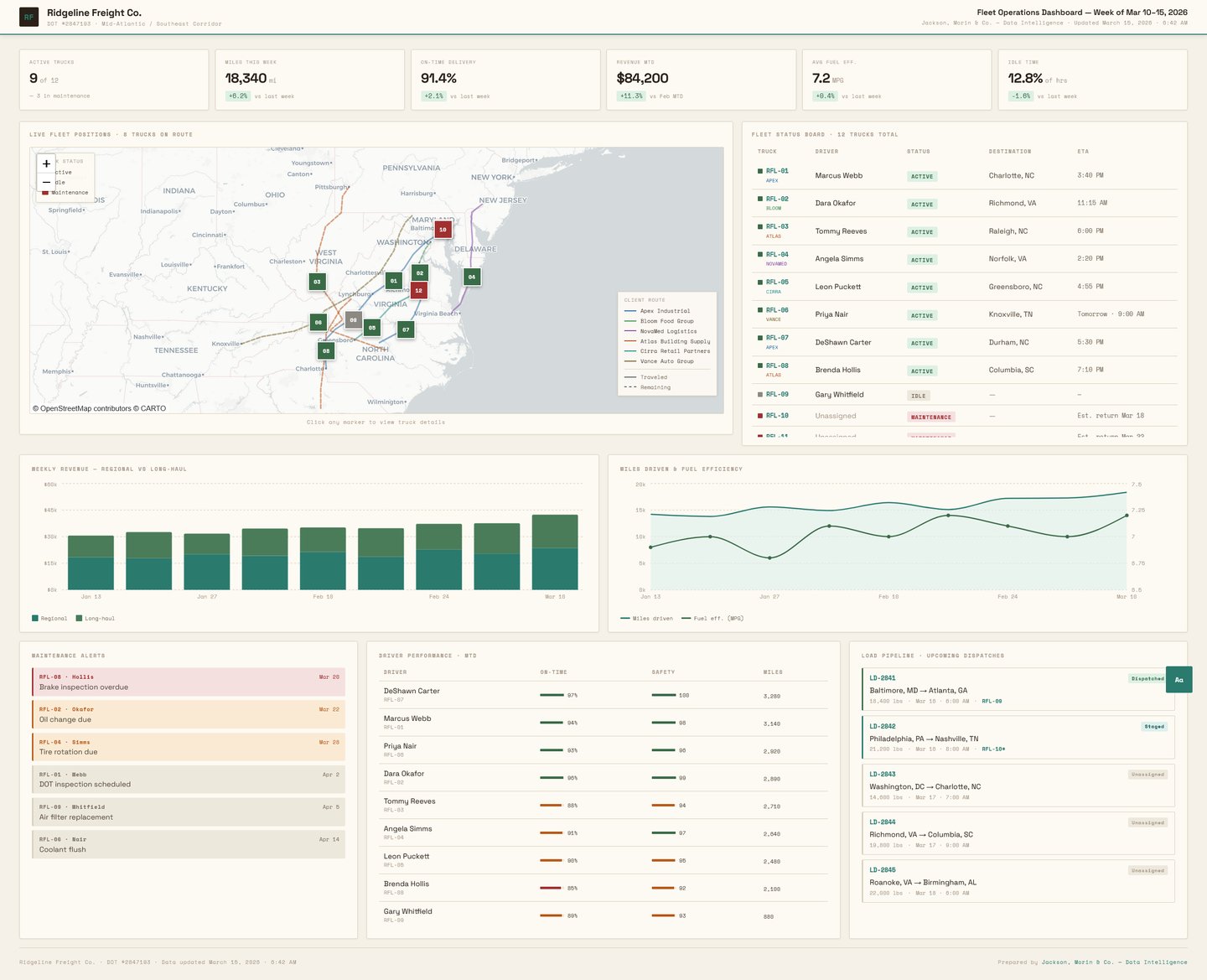
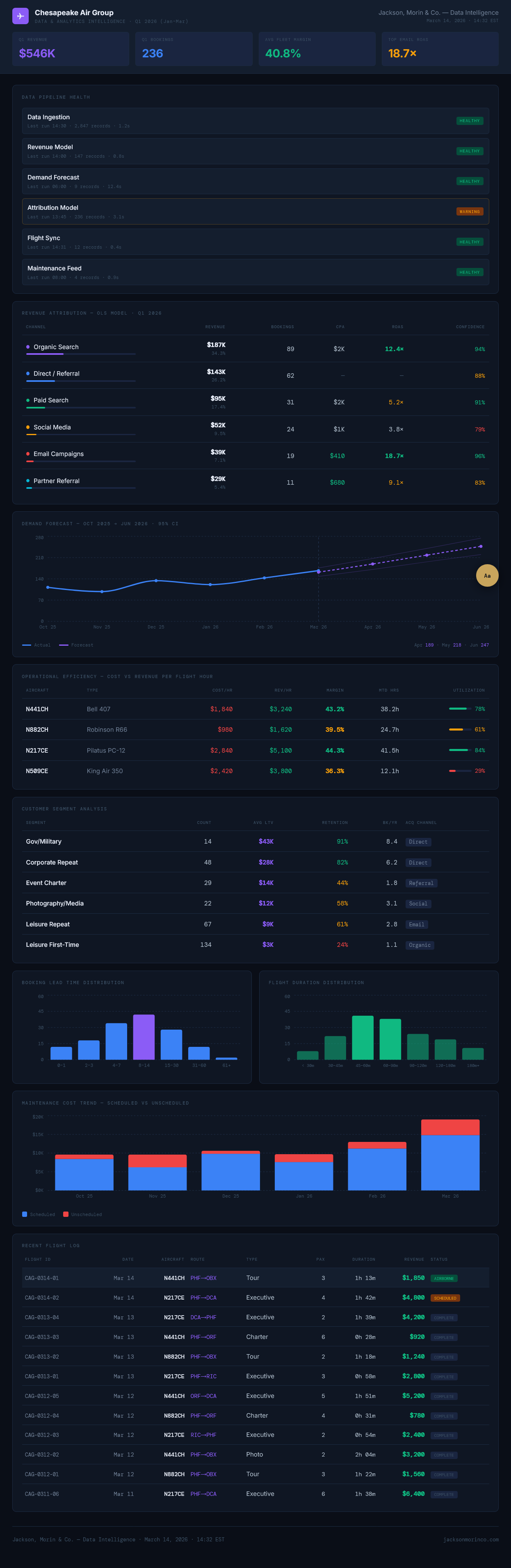
Web analytics layer, live operations center with Leaflet flight-path mapping and pilot duty-hour legality board, and a deep analyst layer with OLS revenue attribution, demand forecasting, and confidence intervals.
Sampson Voyage Tracker ↗
Real-time AIS vessel tracking via MarineTraffic API, Mapbox GL route visualization with custom layers, live weather overlay, wind pattern visualization, and 60+ episode video archive — all on a single Next.js deployment.
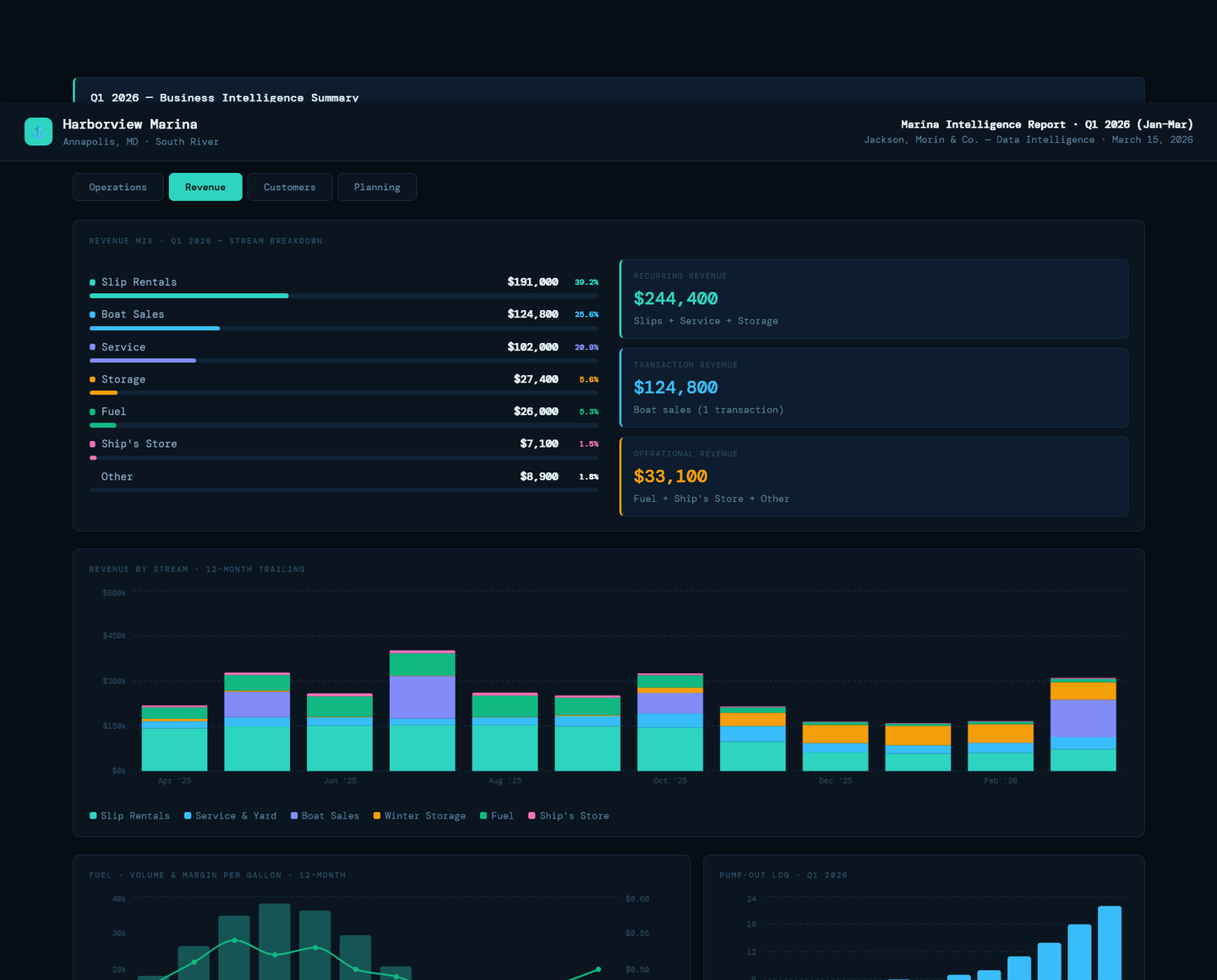
Marina Intelligence Platform ↗
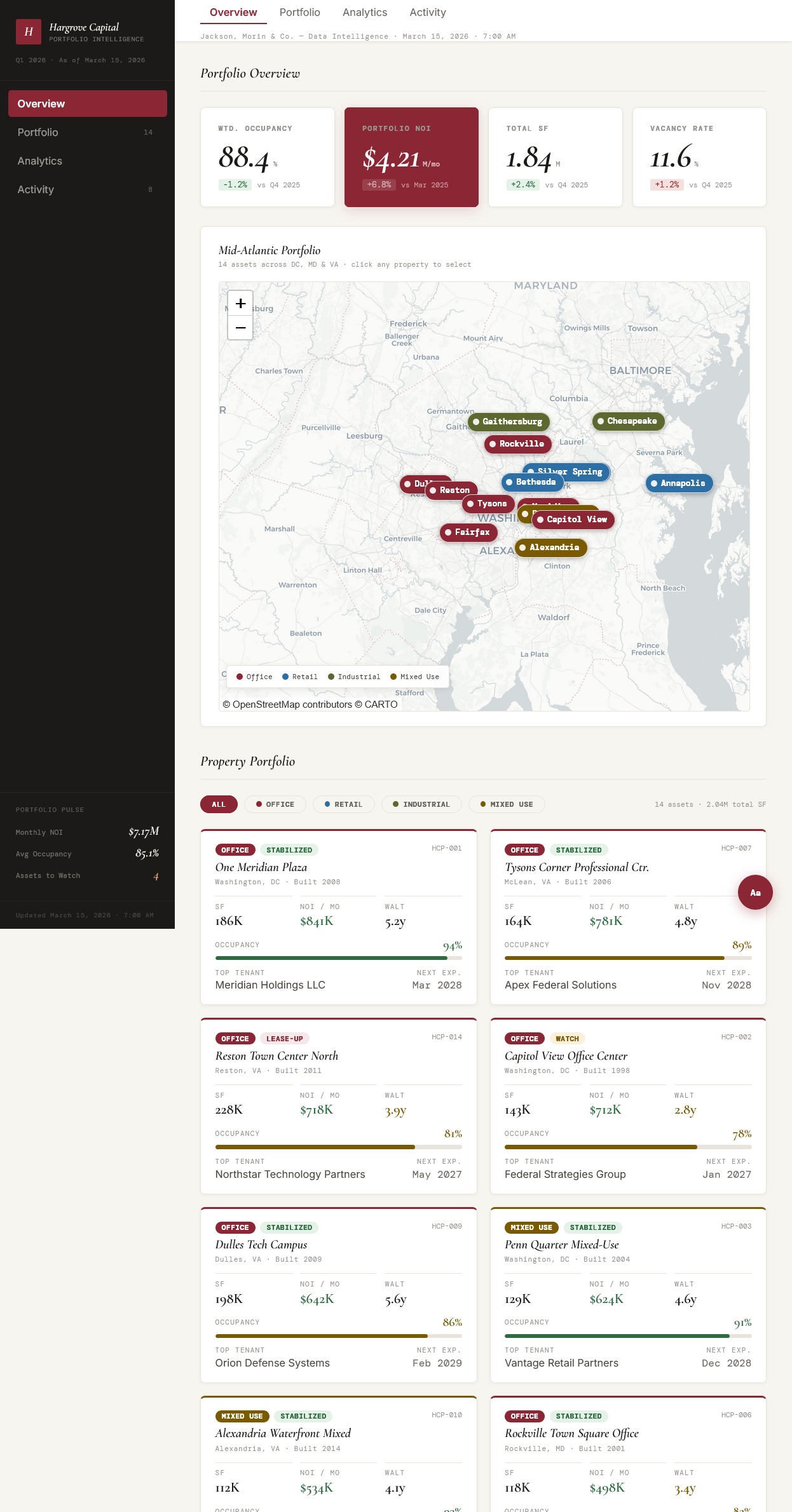
Slip occupancy and waitlist depth, dock utilization by section, 12-month revenue waterfall, service yard ticket analysis, customer LTV cohort analysis with at-risk account flagging, and 18-month seasonal demand forecast.
Tell us what
your business
runs on.
What software you're using, what's breaking, what you're tracking in spreadsheets that shouldn't be. That's enough to start. First conversation is always free.